June 19
Why Rent a Bridge?
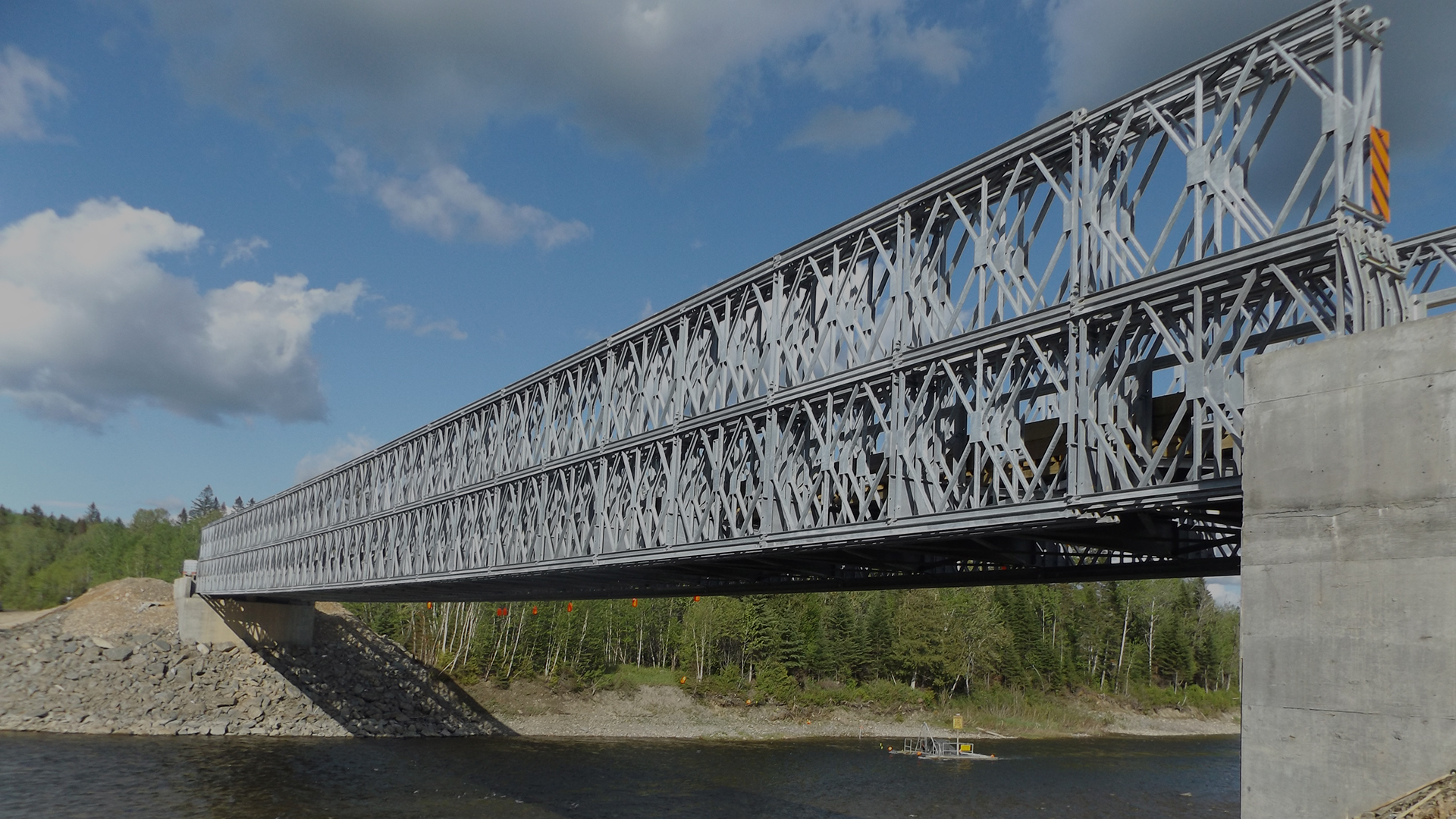
Modular steel rental bridges are used across a broad variety of applications, and all projects share key benefits: improved safety, cost efficiencies for the bridge owner and the contractor, shorter construction timelines, and minimized public disruption. For these reasons, as funding from the Infrastructure Investment and Jobs Act has accelerated the pace of bridge rehabilitation and replacement projects nationwide, we have seen a growing preference among project owners and contractors for detour bridges as the preferred rerouting solution during construction. In addition to planned projects, modular steel bridges are often the solution of choice for rapid emergency response.
Improved Safety
Work zones are dangerous, and becoming even more so. Based on the results of its most recent annual work zone survey of over 600 highway construction builders, the Associated General Contractors of America (AGC) found 60 percent of highway contractors reported at least one crash in the past year that involved a moving vehicle. The survey results also found motorists are in even greater danger than construction workers – 30 percent of contractors reported crashes with injury to construction workers, but 71 percent reported crashes with injury to drivers or passengers. In addition, AGC’s chief executive officer noted 47 percent of contractors reported that highway work zones are more dangerous than they were a year ago, while another 51 percent say the risks are the same as a year ago.
As the Federal Highway Administration (FHWA) has noted, factors in work zone crashes – whether on highways, minor arterials or local roads – include speeding and distracted driving, as well as daily changes in traffic patterns, narrowed rights-of-way, and other construction activities. Clearly, removing traffic from work zones is safer for motorists and workers, but often, no reasonable alternate route is available. In such cases, renting a detour bridge, which provides a predictable traffic pattern for motorists, can help provide a solution to several of the issues outlined by the FHWA above.
Cost Versus Value
For many DOTs and agencies at the county and municipal levels, ‘economy’ encompasses more than just the upfront fixed dollar cost of a temporary rental bridge. Increasingly, these stakeholders are factoring the additional life-cycle expenses incurred by motorists, the broader community due to construction activity, and the agencies. By incorporating these analyses, agencies can better assess the true economic impact of different construction approaches, which often shows the real value of renting a temporary detour bridge.
These “work zone user costs” include travel delay costs, vehicle operating costs, costs of local road detour improvements, and costs for “maintenance of traffic strategies” such as barriers and other devices for managing work zone safety. The FHWA’s report, “Work Zone User Costs – Concepts and Applications”, may be helpful in evaluating the economic impact of various construction methods to ensure impacts to the public are minimized and the most economical solution is selected.
Reduced Construction Timelines
As the pace of projects to address aging infrastructure increases, a growing number of U.S. State Departments of Transportation (DOTs) are adopting Accelerated Bridge Construction (ABC) methods to deliver safer, higher quality projects benefitting both the agencies and the public. Because of their quality, durability and reduced environmental impact, prefabricated bridge elements and systems are widely recognized as a key element of ABC. In addition, modular steel components require minimal specialized equipment or training to assemble and install. They are well-suited for remote areas or tight, congested sites, and can be engineered for the most complex requirements, inclusive of complex movable bridges that allow the passage of marine traffic.
Reducing project timelines can have significant environmental benefits as well. The construction industry is a large contributor to global energy and process-related carbon dioxide emissions, and there is an increased focus on delivering infrastructure projects with the best environmental outcomes. Because they can reduce project timelines, detour rental bridges offer significant benefits over phased construction in terms of diesel emissions from construction equipment as well as gas emissions from queuing vehicles. Overall, decreased construction time also minimizes noise pollution and other potential impacts on wildlife habitats, and in the case of reusable modular steel detour bridges, components are made from sustainable, infinitely recyclable steel.
Minimized Public Disruption
As ABC becomes more widespread, communities are beginning to expect faster, more efficient, and less disruptive infrastructure improvements. Quicker construction not only reduces direct road user costs as discussed above, but also helps preserve daily routines, keeps commutes smooth, and minimizes disruptions to local businesses and regional economic activity. For emergency responders, maintaining a smooth traffic flow can support faster response times that truly save lives. And for nearby residents, shorter project completion means less exposure to construction-related noise, dust, and vibrations.
Post-construction surveys consistently show strong public support for ABC. For project owners, the minimized public disruption from faster construction shows both an efficient use of taxpayer dollars and responsiveness to community needs.
Rapid Emergency Response
As extreme weather events become more frequent, we have seen a rise in emergency response projects where customers turn to modular steel bridges as their preferred recovery solution. Whether 100 feet (30m) or 1 mile (1.6km) long, our modular steel rental bridges are easily and quickly installed, safe and reliable, and are often favored over traditional construction methods in the wake of disasters. Components can be efficiently delivered from stock to even the most remote or difficult-to-access areas and assembled quickly with minimal equipment. Precision-engineered for seamless installation, these high-quality structures offer exceptional versatility, allowing them to be deployed, dismantled, and reconfigured across a wide range of applications.
For more than 70 years, Acrow has been serving the transportation and construction industries with bridging solutions for a wide range of applications. Acrow’s economical detour rental solutions are valued for ease of assembly, erection and disassembly, and can help ensure the success of the most complex projects.
Acrow’s modular steel rental bridges are compliant with the most rigorous highway design standards and supplied from inventory located across North America and Europe. Acrow is the preferred supplier of rental bridging to multiple transportation agencies, as well as to contractors and engineering firms, many of which already have inventory of Acrow components.
From inception through execution, Acrow’s comprehensive service helps ensure your project’s success. Working in partnership with our clients, Acrow assists with project planning, and provides detailed engineering drawings designed to project specifications. We also support installation, decommissioning and return delivery of the Acrow bridge with our team of experienced on-site technicians.