September 04
The Role of Modular Steel Bridges in Sustainable Forest Management
What are the benefits offered by modular bridging in support of sustainable forest management?
Over the past few decades, forestry has evolved dramatically. Today, the industry is guided by a broader vision that balances economic performance with long-term ecosystem vitality. Robust, well-designed infrastructure is a key enabler of these outcomes.
The condition and performance of in-forest roads and bridges directly influence the efficiency, safety and productivity of forestry operations. This is true across the full range of forest management activities, including inspections and monitoring, replanting initiatives, fire prevention and emergency response, and pest and disease control. Because access solutions must be durable, resilient, adaptable and environmentally responsible, versatile modular steel bridges have a long and successful track record in forestry applications worldwide.
Engineered for Remote and Demanding Environments
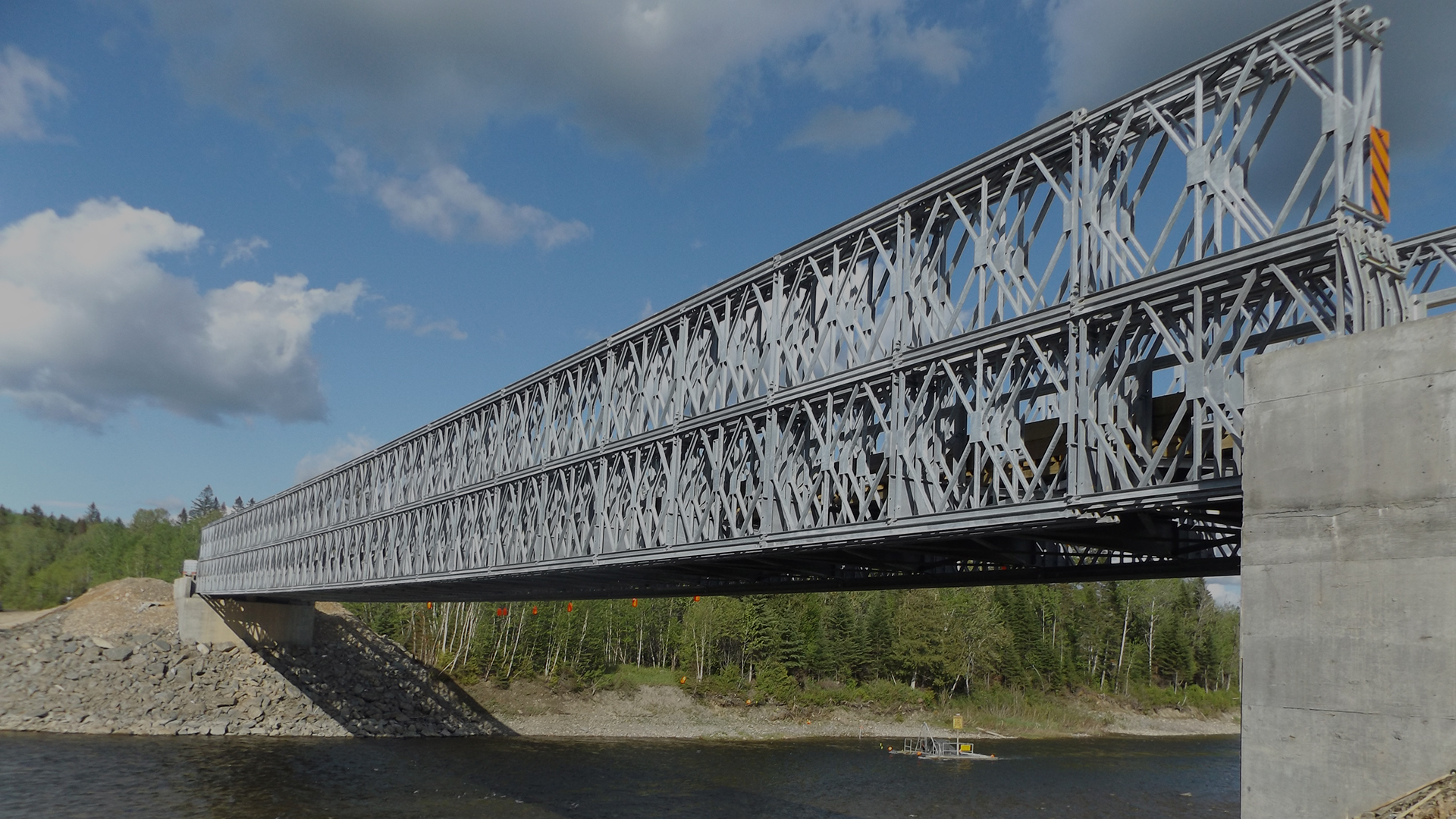
Modular steel bridges, whether used for permanent or temporary applications, are exceptionally well-suited to forestry operations and can address many of the industry’s distinct operational demands. Easily transported over challenging terrain and into remote sites, they are designed for simple and rapid assembly and installation. Structures can be rapidly erected in just days using hand tools, light equipment, or specialist logging equipment such as yarders, without the need for on-site cutting or welding, which is critical for forestry operators working within tight harvesting windows.
They can support the heaviest forestry loads, including fully-loaded logging trucks or maintenance vehicles. When used for temporary applications, precision-fabricated, interchangeable components allow the structures to be easily disassembled and relocated as needs change.
Long-Term Performance and Material Sustainability
Premium modular bridging systems, such as those supplied by Acrow, use high-quality, high-strength structural steel with performance characteristics that exceed those of steels used in buildings and many other structural applications.
To provide long-term protection from corrosion, Acrow’s bridges are fully hot-dip zinc galvanized, rendering them virtually maintenance-free throughout a service life of 100 years or more. Reduced maintenance not only lowers lifecycle costs but also minimizes worker exposure to risk and eliminates environmental impacts associated with repeated cleaning, repainting, or invasive repair activities.
It’s worth noting that steel is the world’s most recycled material and can be reused indefinitely without loss of strength or quality. The zinc used in the galvanizing process is likewise highly recoverable and recyclable, further enhancing sustainability credentials.
Prefabrication offers additional environmental benefits. Manufacturing bridge components in a controlled facility allows for precision engineering, improved quality control, reduced material waste, and efficient recovery and recycling of scrap.
Reduced Environmental Footprint
Compared with traditional construction, the compact size and relative light weight of modular steel bridges allow them to be transported into forest locations using smaller vehicles, resulting in less site disturbance and reduced ground compaction.
Straightforward assembly with minimal equipment requirements shortens installation timelines and reduces diesel emissions from construction activities. Clear-span configurations provide additional ecological advantages. By eliminating the need for intermediate piers, impacts on waterways, streambanks, and aquatic habitats are significantly reduced, supporting responsible watershed management.
Climate Resilience and Operational Continuity
As climate change increases the frequency and severity of extreme weather events, infrastructure in forested regions must withstand evolving and unpredictable conditions. Modular steel bridge systems are engineered with resilience in mind, offering enhanced flood performance to manage high-velocity water events, substantial wind load capacity, and the ability to meet seismic requirements where necessary.
Their structural robustness ensures continued access during and after extreme events, supporting both operational continuity and emergency response. Whether facing intense storms, flooding, wildfire, or heavy snow loads, these bridges are designed to perform reliably under pressure.
Enhancing Emergency and Salvage Logging Access
Modular bridges provide a critical advantage in forest fire management and disaster recovery. During wildfire events, emergency vehicles and other heavy equipment must move quickly and safely, but many of the aging timber bridges in forested areas have unknown or limited load ratings. Replacing them with durable modular steel bridges ensures that emergency crews can safely cross without hesitation, improving response times and safety.
If fire, flooding, or storm events destroy existing structures, modular bridges can be deployed quickly as emergency bridging solutions. In addition to restoring access for continued fire suppression efforts, recovery operations or replanting initiatives, they can provide a way to salvage viable timber before deterioration reduces its value.
Economic and Operational Flexibility
In today’s forestry environment, infrastructure must do more than simply provide access – it must deliver long-term value, operational flexibility, and environmental responsibility. Modular steel bridges meet these demands by offering a sustainable, high-performance alternative to traditional construction, while supporting scalable infrastructure planning and responsible asset management.
By strengthening the reliability of in-forest roads and stream crossings, these bridges reduce costly delays, improve safety, and enhance efficiency across day-to-day forestry operations, including salvage logging and restoration efforts. Most importantly, they align with the broader goals of sustainable forest management, delivering resilient performance in demanding conditions while minimizing environmental impact.
As forests and forestry practices continue to evolve, modular steel bridges stand out as a smart, cost-effective infrastructure investment for both government agencies and private forestry operators – supporting operational needs today while safeguarding resources for the future.
To find out more about how we can support your next project, reach out to us here.