September 20
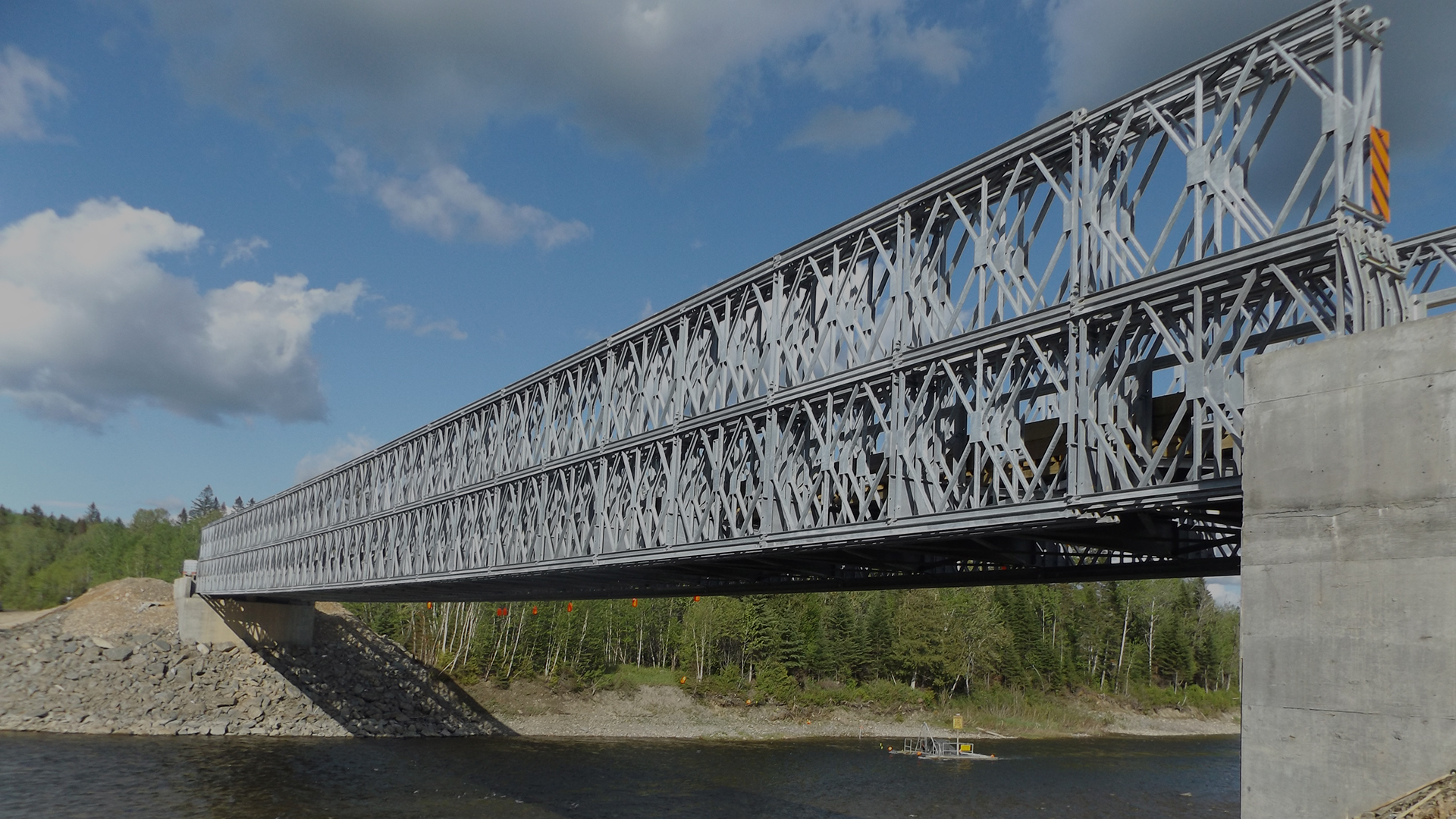
Prefabricated modular steel bridges – Not all are created equal
While modular steel bridges deliver enormous benefits to project owners, considerable differences in quality exist among the options available in the global market. Evaluating the quality of the various options should not be based on initial cost alone, rather, a broader assessment is essential. An owner needs to assess from design to fabrication to construction and performance throughout the structure’s lifecycle. Assessing the full spectrum of cost is the only way to obtain a true sense of overall value.
Quality in Design
Quality in bridge design begins with an adherence to industry standards, such as those published in the Steel Bridge Design Handbook. The Handbook is maintained by the National Steel Bridge Alliance (NSBA), a division of the American Institute of Steel Construction (AISC), and updated as needed – most recently in 2021. Regarded as a critical reference and educational tool, the Handbook includes information on a wide range of topics to enable bridge engineers to make informed decisions based on recognised principles of design. Ultimately, a company with a strong track record of technical competence will bring the engineering expertise needed to overcome the most complex challenges through innovative design.
Quality Materials
The quality of the steel itself is at the heart of a dependable modular steel bridge, and steel from the U.S. is manufactured in an environment that is certified to and under the oversight of the premier international quality assurance standards. Structural steels used in bridges have performance characteristics that exceed those of steels used in buildings and many other structural applications; therefore, it is important to know if the steel used in a bridge conforms to benchmarks established by U.S. and international organizations such as ASTM International, AISC, and the International Organization for Standardization (ISO), which assures product consistency and quality. A further sign of quality is a product which conforms to health, safety, and environmental protection standards, as is the case with products carrying the European Conformity symbol of CE.
Quality Processes
Whether a bridge is constructed using steel or concrete, corrosion is a primary cause of deterioration. The surface protection of a steel structure is an important element to consider when assessing quality, life cycle costs, and current day and future environmental hazards. Several options for surface protection of steel are available, and they are weathering steel, painting, metalizing, or hot-dip zinc galvanising. Weathering steel is popular for some outdoor structures, however, generally not recommended for bridges exposed to environments with damp conditions, accumulations of water, or exposure to salts from ocean water or de-icing products. Paint has high future maintenance costs over time, and poses environmental dangers from the toxic substances used in both the initial metal preparation and paint application. Metalizing is a spray coating technique providing corrosion protection longer than paint alone but is not considered as advantageous for bridge construction as hot-dip zinc galvanising.
In the hot-dip galvanising process, the fabricated steel component is dipped into a bath of molten zinc. The zinc fuses and unites with the steel to form a tightly bonded shell over the entire external and internal surfaces of steel shapes for a superior consistent corrosion protection, that if scratched heals itself, and possesses an estimated time to first maintenance of more than 75 years. A galvaniser with an ISO 9001 accreditation for quality management is an indicator that components will be galvanised under strict guidelines and free of defects. A solid quality management program will also address safe and secure shipping of the finished product to ensure the receipt of damage-free goods.
Furthermore, hot-dip galvanising provides superior protection to a prefabricated modular steel bridge, rendering them virtually maintenance-free, dependent on the local environment, for over 100 years. Owing to the accessibility of the components, they can be inspected visually to efficiently evaluate their condition, and if necessary, repaired easily by removing and replacing components or strengthening components with additional steel, often with little to no impact on traffic flows.
Quality Manufacture
The highest-quality manufacture is critical in the case of prefabricated modular steel bridge systems which rely on interchangeable components for simple, rapid assembly. A buyer needs to ensure that their chosen bridge manufacturer operates under the oversight of multiple quality assurance organisations. Organisations that perform yearly audits of a company’s quality programs include AISC, ISO, the American Welding Society, CE, and many more. When these quality assurance programs are not in place, quality problems from faulty manufacture result in delays and cost overruns, often negating any apparent savings.
Companies that incorporate these quality assurance systems also integrate the use of robotics and automation in their manufacturing processes. Robotics provide for exceptionally precise and consistent welds, and automation ensures tolerances are always maintained, which enhances the safety of the bridge for the motoring public.
As environmental governance efforts continue to increase in importance, it may be relevant to determine if a manufacturer has comprehensive processes in place to define and achieve science-based sustainability targets. ISO’s 14064 Standard provides organizations with the steps to developing greenhouse gas inventories, and accreditation indicates a clear commitment to managing and reducing carbon emissions.
Quality Partnerships
Large or small, bridge projects can pose numerous complexities, and finding the right partners is key to a successful bridge build. A strong commitment to comprehensive service excellence – from project inception through bridge commissioning – is another strong indicator of a quality modular bridge manufacturer. Important questions to ask are: Do they provide on-site guidance throughout site preparation, assembly, and placement? Do they have a solid track record in providing technical support at each step for a safe and successful installation?
Prefabricated modular steel bridges, when manufactured by companies certified to multiple quality assurance systems, deliver enormous benefits in terms of a rapid supply of materials, speed of construction, lower costs, as well as improved work zone safety. It is vital for an owner to perform a close analysis of engineering expertise, product excellence and service commitment across potential providers because doing so helps define those with strong quality assurance programs, and is time well spent. As the saying goes, “The bitterness of poor quality remains long after the sweetness of a low price is forgotten.”