June 19
Protecting Workers and the Public: The Role of Modular Bridges in Safer Job Sites
On April 22, 2025, during the kick-off event for National Work Zone Awareness Week, U.S. Transportation Secretary Sean Duffy noted that 899 people died in work zone crashes during 2023. While this figure represents a slight decrease from 2021, he stated “the number of fatalities in work zones remains unacceptable.” Prior to the start of seasonal roadway construction, this annual public awareness campaign is conducted to underscore the importance of work zone safety and to encourage motorists to exercise caution and prioritize safety in and around work zones.
This is an urgently needed message, as statistics from the National Highway Traffic Safety Administration indicate a stubbornly high rate of fatal traffic crashes involving distracted driving. In addition, increasing roadway construction, more vehicles on the road and more overnight work are putting more workers and motorists at risk. In 2022, the National Work Zone Safety Information Clearinghouse reports there were an estimated 92,000 work zone crashes.
Despite robust traffic management systems in place, the Associated General Contractors of America (AGC), in its most recent annual work zone survey of over 600 highway construction builders, found more than 60% of contractors reported motor vehicle crashes in their work zones in the last year. While risk to workers is high – the survey found that 30% of contractors reported crashes with injury to construction workers – more than twice as many firms reported crashes that injured drivers or the occupants of vehicles. Nearly half of the survey respondents said work zones are more dangerous than a year ago, citing increased traffic, speeding, and distracted driving among the leading causes.
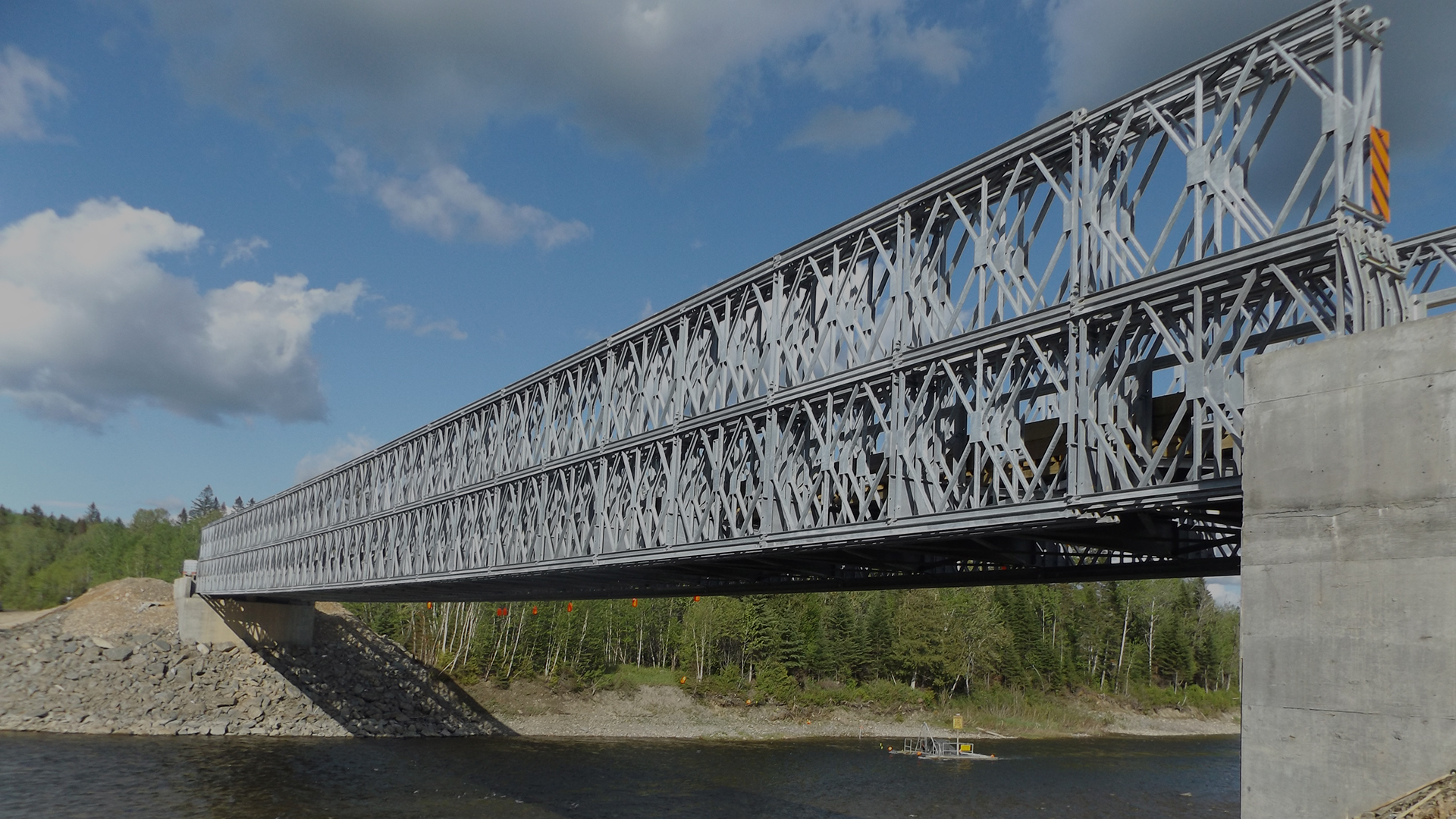
Unpredictability is the norm in construction zones, with daily changes in traffic patterns, narrowed rights-of-way, sudden stops, uneven road surfaces and construction activities among the unique challenges faced by drivers. As a result, nearly 60% of respondents to the AGC survey chose “closing roads and detouring traffic” as a measure that would help reduce the number of work zone crashes. Clearly, removing traffic from work zones is the safest option, but often, no reasonable alternate route is available. In such cases, a modular detour bridge, which provides predictable traffic patterns for motorists, can greatly enhance work zone safety for projects on both major and minor routes.
To expedite highway project delivery, the Federal Highway Administration (FHWA) established Every Day Counts (EDC), an initiative focused on identifying and deploying innovations aimed at reducing the time it takes to deliver highway projects to enhance roadway safety, reduce traffic congestion and improve environmental sustainability. EDC provides state-level transportation agencies with new methods, ideas and products that can save time, money, and resources to ultimately help deliver more projects and better serve the traveling public.
Among the innovations endorsed by EDC is Accelerated Bridge Construction (ABC), which uses safe and cost-effective planning, design, materials and construction methods to reduce the onsite construction time involved in building new bridges or replacing and rehabilitating existing bridges. The accelerated project timelines can significantly reduce traffic impacts – and work zone crashes – and may be the most cost-effective construction method when total project costs, including maintenance of traffic expenses, are included. Prefabricated Bridge Elements and Systems is among the core technologies of ABC.
Prefabricated modular steel bridges, which offer numerous benefits over more traditional “phased” construction, are quickly assembled and installed and have a proven track record of successful performance as safe and durable solutions for both permanent and temporary applications. In addition to reduced construction time, constructing a prefabricated bridge requires less on-site labor, minimizing worker exposure to hazards including formwork setup, working at heights and working with heavy machinery.
With the number of projects to repair and rehabilitate bridges on the rise in recent years, we have seen project owners and contractors increasingly selecting detour bridges over other re-routing methods during construction projects. In addition to a wide range of single bridge projects, we have also been involved in several “bridge bundling” programs. These bundled projects, which treat two or more projects as a single project, can result in safety benefits through decreased construction time, and offer potential savings through economies of scale. In numerous cases, the use of modular detour bridges has helped deliver projects early and under budget.
Maintaining our transportation infrastructure is vital and increased funding will help us reduce the backlog of much-needed bridge repairs. With upgrade projects on the rise, modular detour bridges offer a cost-effective way to increase safety, while minimizing overall work zone impacts to motorists and the local economy. When work zone exposure is reduced, it’s a win-win for both workers and the traveling public.